Personal Branding Examples for Men Who Lead: How High-Performing Men Signal Authority Without Saying a Word
For top-tier men aged 35 to 55 who feel misaligned, are navigating a new stage of life, and want to step into the version of themselves they’ve been ready for all along.
What You’ll Find In This Guide
Why personal branding examples matter more than a generic personal branding statement
How successful men use style as a personal branding strategy
Real-world personal branding ideas across different leadership roles
What separates a polished look from a powerful personal brand
How to build a personal branding statement through how you show up

Why Most Men Misunderstand Their Personal Branding Statement
They think it’s about visibility.
More content.
More posts.
More noise.
But the men who actually lead?
They don’t chase attention.
They control perception.
And perception is built long before you speak.
It’s built in:
how you enter a room
how you carry yourself
how consistently you present
This is where most men fall short.
Not because they lack taste…
But because they lack alignment.
What Personal Branding Actually Is (For Men Who Lead)
A real personal branding strategy isn’t about becoming someone else.
It’s about removing the disconnect between:
who you are
how you show up
Because when those two things match:
decisions get easier
confidence stabilizes
people respond differently
This is why style matters.
Not as decoration.
As a signal.
“Ready to align your personal brand with who you’ve become?
Check out The Aesthetic Advantage: a proven system for building style and presence that genuinely holds up in real life.”
Personal Branding Examples (Real-World Archetypes)
Let’s make this tangible.
Not influencers.
Not trends.
No B.S.
Real-world positioning.

1) The Founder
Brand Signal: Decisive. Focused. High-leverage.
Structured outerwear
Neutral palette (navy, charcoal, black)
Clean, minimal footwear
Think Ryan Reynolds when he’s not on screen.
Sharp, but not trying.
Relaxed, but deliberate.
There’s humour in his personality, NOT in his presentation.
Nothing distracts from the signal… he’s in control
2) The Corporate Leader
Brand Signal: Authority. Stability. Precision.
Tailored trousers
Crisp shirts
Elevated business casual layers
This is less about standing out…
More about being impossible to question.
Think of the kind of man who walks into a boardroom and doesn’t need to introduce himself twice.
Everything fits.
Everything is intentional.
Trust is built before he speaks.
3) The Creative Executive
Brand Signal: Taste. Range. Cultural awareness.
Texture (suede, knits, wool)
Slightly relaxed silhouettes
Subtle variation in colour
A good reference point here is Tom Ford.
Not because of flash…
But because of restraint.
Every piece feels chosen.
Nothing feels accidental.
He understands the rules and edits them with precision.
4) The Investor / Operator
Brand Signal: Calm confidence. Quiet power.
Understated luxury
Perfect fit
Repetition of core pieces
Think Richard Branson in his off-duty environments.
Effortless.
Unforced.
Consistent.
There’s no need to impress.
Because nothing about him feels uncertain.

What These Personal Branding Examples Have In Common
Different roles.
Different industries.
Same underlying principle:
Consistency creates credibility
Not perfection.
Not variety.
Consistency.
Because when your presentation is predictable (in a good way):
people trust faster
you feel more grounded
your identity becomes clear
This is where most men drift.
They change too often.
They experiment without direction.
They reset every few months.
That’s not evolution.
That’s instability.
What Misaligned Personal Branding Ideas Quietly Cost You
You don’t stay neutral.
You become unclear.
And unclear men get:
overlooked
misread
underestimated
Even if they’re highly capable.
Especially in:
leadership environments
dating after long-term relationships
new phases of life
This is why personal branding isn’t optional.
It’s structural.

How to Build Your Own Personal Branding Strategy
Not from scratch.
From clarity.
Step 1: Define Your Baseline
Where are you now?
Not aspirationally.
Honestly.
Step 2: Identify the Gap
Who are you becoming?
promotion
reinvention
expansion
That gap is where your work is.
Step 3: Align Your Presentation
This is where style comes in:
silhouette
colour palette
consistency
Not more clothes.
Better decisions.
Step 4: Reinforce It Daily
This is the part no one talks about.
Repetition.
Because identity is not declared.
It’s demonstrated.
Where Most Personal Branding Advice Slips
It’s too abstract.
Too performative.
Too focused on external validation.
Real personal branding for men is quieter than that.
It shows up in:
how you dress on a random Tuesday
how consistent your wardrobe feels
how little you second-guess yourself
That’s the goal.
Not attention.
Alignment.
FAQ: Personal Branding for Men
What are good personal branding examples for men?
Strong personal branding examples show consistency between identity and presentation. This includes clothing, grooming, and overall presence aligning with the man’s role and stage of life.
Do I need a personal branding coach or course?
Not always, but it does help. Many men can refine their personal brand by applying structured principles. A personal branding course can accelerate your clarity and remove any guesswork.
How does style impact personal branding?
Style is one of the fastest ways to influence perception. It communicates confidence, attention to detail, and self-awareness before you speak.
What is a personal branding statement for men?
A personal branding statement is a clear expression of how you want to be perceived. For many men, this is reflected more through consistent presentation than words alone.

Why Well-Informed Men Rarely Execute
They consume content.
They save ideas.
They follow mens stylists.
But they never install a system.
Without a system:
You drift.
You second-guess.
You revert under pressure.
A system beats inspiration.
EVERY time.
The Second Act Philosophy
Second Act Aesthetic exists for one reason:
To help high-performing men 35-55 years old align their identity with their presentation in the next season of their lives.
Not trends.
Not vanity.
Not peacocking.
Alignment.
Because when identity and presentation match, everything stabilizes.
Your posture.
Your communication.
Your dating life.
Your leadership presence.
You stop hoping to be perceived well.
You expect to be.
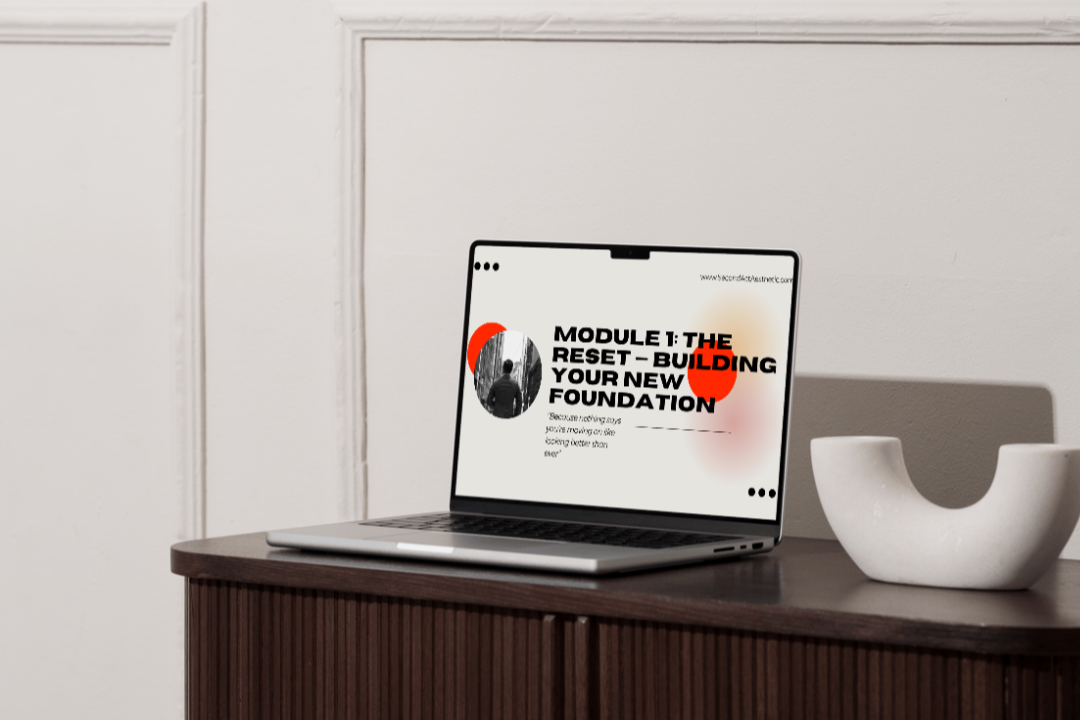
Introducing: The Aesthetic Advantage
The Aesthetic Advantageis the structured system behind everything you just read.
Not consulting.
Not handholding.
Not fashion advice.
A proper blueprint.
YOUR blueprint.
Inside you’ll find:
Personal brand calibration framework
Stop guessing how you come across. Dial in a clear, intentional standard for how you’re perceivedMens wardrobe essentials blueprint
A repeatable system for looking sharp in any room without trial-and-error purchasesGrooming and presence alignment strategy
Eliminate the small inconsistencies that quietly make you look less put-together than you areLifestyle alignment
No more “outfit vs reality” disconnect: find out how your style truly integrates with how you live, travel, and interactLong-term success structure
A step-by-step system that saves you from reverting back to old habits or stalling out six months from now
This is designed for high-performing men 35–55 years old in transition…
Divorce.
Promotion.
Reinvention.
Expansion.
Men entering their Second Act.
You implement it.
You develop it.
You own it.
No gatekeeping.
No B.S.
Just structure.
Imagine 90 Days From Now
You enter a room.
No adjustment.
No scanning.
No second-guessing.
Everything feels aligned:
Not louder.
Clearer.
People don’t react to your outfit.
They respond to your newly aligned presence.
That’s The Aesthetic Advantage.
Final Word
You searched for personal branding examples…
But the deeper question is this:
“What does alignment ACTUALLY look like for me?”
That’s not surface-level.
That’s powerful.