Personal Branding Statement for Men: Why You’re Not Being Seen at Your Level (And How to Fix It)
For high-performing men aged 35 to 55 who feel slightly out of sync, entering a new season of life, and are ready to close the gap between who they are and how they show up.
What You’ll Find In This Guide
What a personal branding statement for men is (and why it matters more now than ever)
A clear framework to define yours without sounding generic
Real personal branding examples grounded in real-life transitions
How your style, grooming, and presence reinforce your identity
The proven system high-achieving men use to master their personal brand without personal branding coaching

Personal Branding Statement for Men: What It Is (And Why It Matters Now)
There’s a point most men reach where effort is no longer the issue.
You’ve built:
A career that works
A reputation that holds
A level of discipline that’s carried you this far
And yet something feels… slightly off.
Not wrong.
Just not aligned.
You notice it in subtle ways:
You’re respected, but not fully felt
You’re established, but not clearly positioned
You’re doing well, but not showing up the way you know you could
That gap isn’t about capability.
It’s about clarity.
A personal branding statement for men is simply a decision:
A clear definition of who you are now so your presence, your appearance, and your communication all move in the same direction.
Because if you don’t define it…
People will.
When your identity is clear, everything else follows…
The Aesthetic Advantage gives you the structure to align your personal brand, refine your style, and present yourself with clarity, consistency, and intent (no second-guessing).
Personal Branding Strategy for Men: Closing the Gap Between Who You Are and How You’re Seen
This usually shows up during transition:
After a divorce
After a career plateau or leap
After years of prioritizing responsibility over refinement
Your life evolves.
But your identity (at least how it’s expressed) lags behind.
So you push harder.
But pushing harder doesn’t fix misalignment.
Refinement does.
A strong personal branding strategy removes:
Outdated versions of yourself
Inconsistent signals
Subtle contradictions
And replaces them with something far more effective:
Precision.

How to Write a Personal Branding Statement for Men (That Feels True)
Forget trying to sound impressive.
That’s where most men go wrong.
They reach for words that sound right but don’t actually reflect how they live, operate, or show up day to day.
And the result?
Something that reads well… but doesn’t hold up.
That’s not what you want.
You want a personal branding statement for men that feels accurate, grounded, and repeatable — something you can actually live into.
Because if it doesn’t translate into how you dress, speak, and move through the world, it’s not a brand.
It’s just language.
Here’s how to build one that works.
Identity, Who You Are Now:
This is the foundation.
Not your job title.
Not your past.
Not who you were five or ten years ago.
Who you are now, after experience has refined you.
The man who’s been through pressure and didn’t fold
The man who’s recalibrated after setbacks
The man who no longer needs to prove everything to everyone
If this part isn’t honest, everything built on top of it will feel slightly off.
Standard, How You Operate:
This is where most men underestimate themselves.
Your standard is not what you say.
It’s what you consistently do.
How you handle pressure
How you make decisions
How you communicate when it matters
At this level, confidence doesn’t come from hype.
It comes from predictability.
You know how you operate.
And so do other people.
That’s where real self confidence for men is built.
Edge, What Sets You Apart:
This isn’t something you invent.
It’s something you recognize.
And most men overlook it because it feels “normal” to them.
It’s not.
Your edge is usually found in:
The experiences you’ve lived through
The taste you’ve developed over time
The restraint you’ve learned (what you don’t do anymore)
The way you see things others don’t
This is where your personal brand stops being generic and starts becoming specific.

Expression, How It Shows Up:
This is where everything becomes visible.
Because no one sees your thoughts.
They see your execution.
The fit and consistency of your wardrobe (your mens wardrobe essentials, your smart casual baseline, etc.)
The detail in your grooming
The way you speak: measured, direct, intentional
The environments you place yourself in
This is where your personal branding statement either becomes real or falls apart.
If your expression doesn’t match your identity, people feel the disconnect immediately.
They may not be able to explain it.
But they register it.
Putting It Together
When these four pieces align, your personal branding statement becomes simple:
Not forced.
Not overthought.
Not performative.
Just clear.
And more importantly — repeatable.
Because the goal isn’t to write something that sounds good once.
It’s to define something you can live into every day without friction.
That’s when your personal brand stops being something you think about…
And starts being something people experience.
Personal Branding Examples for Men in Real Life
This is where it usually shows up.
Not in obvious ways.
In small, repeatable moments you’ve likely already experienced.
The Executive Who Outgrew His Image
On paper, nothing is wrong.
Senior role
Strong income
Years of experience
But in person, something doesn’t quite land the way it should.
He walks into a meeting and catches his reflection briefly in the glass.
The suit still fits.
Technically.
But the cut feels dated.
The shoulders are slightly off.
The overall look feels like it belongs to a version of him from years ago.
He notices the younger executive across the table.
Sharper fit. Cleaner lines. More current.
No one says anything.
But he feels it.
Not insecurity, just awareness.
He’s built a modern career…
While presenting an outdated version of himself.
His shift isn’t dramatic. It’s precise.
“I operate with clarity and precision, bringing a modern, composed presence to every environment I step into.”
And once that decision is made, everything starts to tighten.

The Man Rebuilding After Divorce
The internal shift has already happened.
Quietly.
He’s more disciplined now
More intentional with his time
Less interested in noise, more focused on direction
But externally?
Nothing reflects it.
He opens his closet in the morning and sees the same rotation:
Clothes he’s had for years
Pieces that no longer feel like him
Outfits that belong to a different chapter
He puts something on.
It works.
But it doesn’t feel right.
Later that day, someone who hasn’t seen him in a while says:
“Man, you haven’t changed.”
It’s meant as a compliment.
It doesn’t land that way.
Because he has changed.
Significantly.
But there’s no visible separation between who he was and who he is now.
That’s where the shift happens.
“I’m building a refined, intentional life rooted in discipline, simplicity, and forward movement.”
Now there’s a line drawn.
And people start to feel it.
The High Performer Entering New Rooms
He’s not lacking capability.
That’s never been the issue.
But when he steps into certain environments—better rooms, sharper circles, higher-level conversations—something feels slightly off.
He walks in, scans the room.
Everyone looks… dialed in.
Not flashy.
Just precise.
He’s not underdressed enough to stand out.
But he’s not aligned enough to disappear into the room either.
He becomes aware of small things:
The way his shirt sits at the collar
The shoes that felt fine this morning but now feel forgettable
The fact that he’s thinking about how he looks more than he wants to
So he adjusts.
Speaks a little less.
Observes more than he contributes—at least at first.
No one excludes him.
But no one immediately locks onto him either.
And at that level, that’s the difference.
His shift is subtle—but decisive.
“I bring calm confidence and sharp attention to detail into every room, expressed through consistency and restraint.”
Now his presence lands cleanly.
Without effort.
Without adjustment.

What All of This Has in Common
None of these men needed to become someone else.
They were already there.
What was missing was alignment.
Between:
Who they are
How they present
How they’re perceived
These aren’t slogans.
They’re anchors.
And once they’re clear, everything else starts to follow.
Personal Branding and Style for Men: Why Alignment Is Everything
At this level, style isn’t separate from identity.
It’s how your identity is experienced.
How you show up is where your standards are revealed —without explanation.
They’re signals.
And you’ve felt this before.
Something fits but not quite right
You’re dressed well but it doesn’t feel like you
You’re present but slightly off
Nothing is wrong.
But nothing is fully aligned either.
That’s not insecurity.
It’s misalignment.
Mens Wardrobe Essentials and Personal Branding: Simplifying Your Style
Once your personal brand is clear, your wardrobe gets simpler.
Not bigger. Not trendier.
Sharper.
You stop chasing options and start building consistency:
A refined mens capsule wardrobe
Clean, reliable mens wardrobe essentials
Smart casual and business casual pieces that work without effort
Now your mornings are easier.
Your decisions are faster.
And more importantly YOU show up the same way every time.
Common Personal Branding Mistakes Men Make
This is where most of the disconnect happens.
Not through big mistakes.
Through small, repeated ones.
Trying to Sound Impressive
You start performing instead of defining.
And performance always feels slightly off.
Staying Too Broad
If your personal brand could apply to anyone, it won’t stick to you.
Holding Onto an Outdated Identity
You’ve changed.
But your presentation hasn’t caught up.
People feel that gap—even if they can’t explain it.
Treating Style as Optional
You assume your results should speak for themselves.
But before anyone understands you—
They see you.
Overconsuming, Underdefining
You read. You research. You think.
But you never actually decide.
And without a decision, nothing locks in.
Waiting Until It Becomes Obvious
You ignore it while it’s subtle.
You wait until it’s undeniable.
By then, you’ve lost time you won’t get back.

Why Trying to “Figure It Out Later” Keeps You Stuck
Most men don’t ignore this.
They postpone it.
“I’ll refine this later.”
“I just need a bit more time.”
“I’ll get to it when things settle down.”
But things don’t settle down.
They compound.
And so does misalignment.
You stay:
Slightly underdressed for your level
Slightly unclear in how you’re perceived
Slightly disconnected from who you’ve become
Not enough to fail.
But enough to stall.
Remember, a personal branding statement without consistent execution is just a sentence.
What matters is how often it’s reinforced.
FAQ: Personal Branding Statement for Men
What is a personal branding statement for men?
A personal branding statement is a concise definition of who you are, how you operate, and what others can expect from you.
It anchors your personal branding strategy and shapes how you’re perceived.
How do I write a strong personal branding statement?
Focus on clarity over creativity.
Define:
Who you are now
How you operate
What makes you distinct
Then refine until it feels accurate, not impressive.
How long should a personal branding statement be?
One to two sentences.
Short enough to remember.
Clear enough to guide decisions.
How often should I update my personal branding statement?
Whenever your life meaningfully evolves.
New chapter, new standard.
If it no longer feels accurate, it’s outdated.
How does style impact personal branding for men?
Directly.
Your wardrobe, grooming, and presentation are immediate signals of your standards.
They either reinforce your identity or quietly contradict it.
What’s the difference between a personal branding statement and a personal branding strategy?
Your statement is the definition.
Your strategy is how that definition is expressed consistently across:
Style
Communication
Environment
Behavior
Can I build a personal brand without changing how I dress?
Technically, yes.
Practically, no.
Because people see you before they understand you.
Why do most men struggle with this?
Because it requires a decision.
And most men delay defining themselves clearly… they operate on momentum instead.

Why Insight Alone Never Changes a Man
They read.
They save.
They follow the right people.
But nothing actually locks in.
Because without proper structure:
You drift back to default.
You hesitate on decisions.
You fall out of alignment the moment life gets busy.
Information feels productive.
But it doesn’t hold.
Structure does. Every time.
The Second Act Philosophy
At a certain point, it’s not about doing more.
It’s about becoming precise.
Second Act Aesthetic exists for one reason:
To help high-performing men 35–55 step into a new season of life without presenting an outdated version of themselves.
Not trends.
Not vanity.
Not trying to stand out.
Alignment.
Because when those two things match — everything sharpens.
Your posture becomes more natural
Your communication becomes more direct
Your presence becomes harder to ignore
You stop managing how you’re perceived.
You become clear enough that it handles itself.
Most men recognize this, and leave it there.
They agree with it.
They feel it.
But nothing actually changes.
Because without structure, clarity fades fast.
You fall back into the same patterns.
The same wardrobe.
The same version of yourself that no longer fits.
The Aesthetic Advantage is where that changes…
So you’re no longer thinking about it — you’re living it.
If you’re stepping into a new season, this is where you make it visible.
Introducing: The Aesthetic Advantage
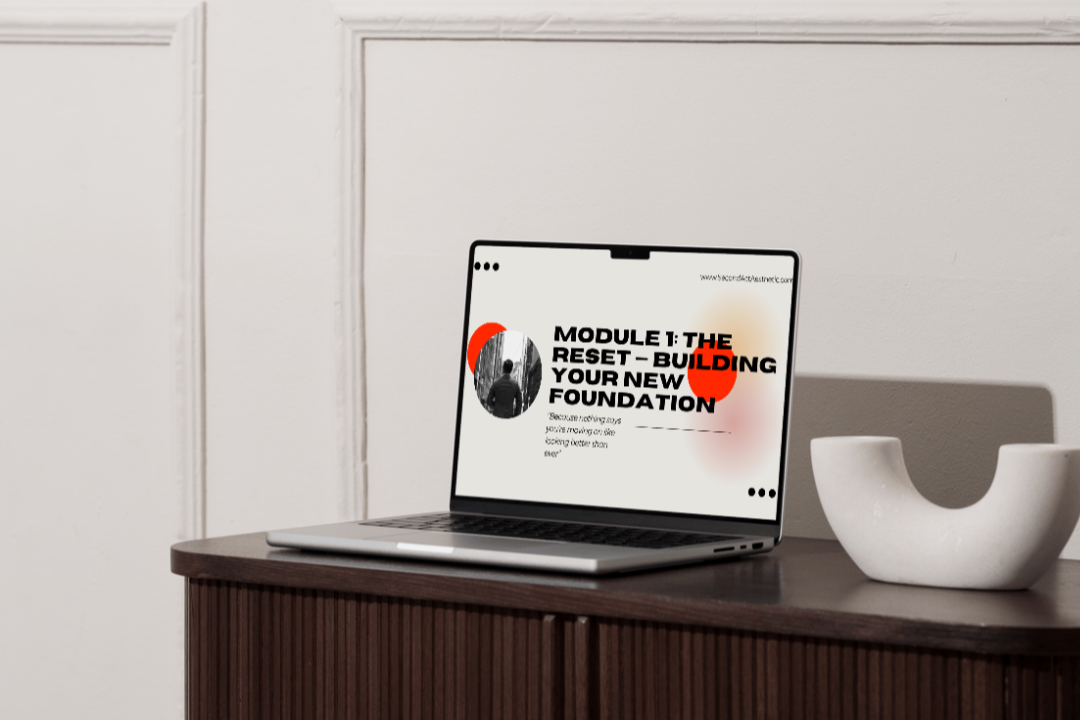
The Aesthetic Advantageis the structured system behind everything you just read.
Not theory.
Not scattered advice.
Not yet another take on mens style.
A structured way to align how you show up with who you’ve become.
Inside you’ll discover:
Personal brand calibration framework
Stop guessing how you come across. Dial in a clear, intentional standard for how you’re perceivedMens wardrobe essentials blueprint
A repeatable system for looking sharp in any room without trial-and-error purchasesGrooming and presence alignment strategy
Eliminate the small inconsistencies that quietly make you look less put-together than you areLifestyle alignment
No more “outfit vs reality” disconnect: find out how your style truly integrates with how you live, travel, and interactLong-term success structure
A step-by-step system that saves you from reverting back to old habits or stalling out six months from now
This is built for high-performing men 35–55 stepping into a new season of life…
Where what got you here no longer feels like enough.
After divorce: when your life has changed, but your presentation hasn’t caught up.
Into promotion: where expectations are higher, and how you show up starts to carry more weight.
During reinvention: when you’re refining your standards, your circle, and how you move.
At the point where your role expands: the rooms get sharper, and expectations rise — small misalignments are no longer welcome.
You don’t rely on a mens stylist or patch it together with scattered mens style advice.
You build a clear personal branding system…
Once.
And it holds across every arena, every setting, every version of your life moving forward.
Imagine 90 Days From Now
You walk into a room.
No adjustment.
No scanning.
No second-guessing.
Your clothing fits the environment.
Your presence feels grounded.
Your communication is direct.
Nothing feels slightly off anymore.
You’re not trying to be perceived well.
YOU ARE.
And people respond to that immediately.
That’s The Aesthetic Advantage.
Final Word
You didn’t search for a personal branding statement for men by accident.
Something already feels slightly off.
Not wrong.
Just not fully aligned.
And at this stage, that gap costs more than it used to.
Most men leave it there.
They adjust around the edges.
They wait until it becomes painfully obvious.
They stay close to where they are.
A small percentage decide to define it properly.
If you’re ready to elevate your personal branding statement, your style, and your presence…
The Aesthetic Advantage is exactly what you need.
No noise.
No guesswork.
Just a clear standard you can live into every day.